Finance · Top Story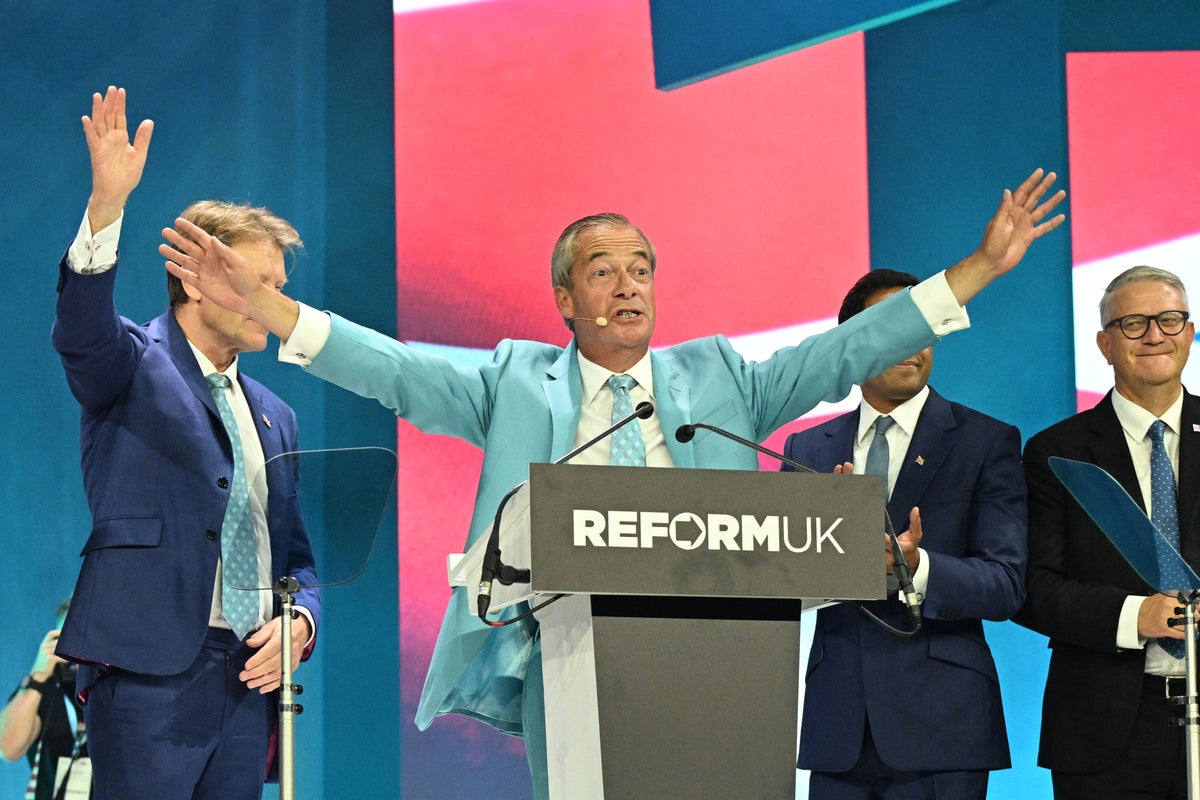
A fter the 2024 general election, the independent Electoral Commission reported that the total spending by all political parties totalled some £94.5m – a record high. Of that, the larger established parties spent £69.3m trying to get their MPs elected. By comparison, Reform UK , the then insurgents, declared just £6m of campaign expenditure.
In monetary terms, they were also-rans. That is part of the context in which the financial bonanza now being enjoyed by Nigel Farage and his fellow travellers must be placed. Two sometime expat British donors (no one seems quite sure about their exact residency), Christopher Harborne and Ben Delo , so-called crypto-billionaires, have contributed £72m between them for Reform to use in the run-up to the next general election.
This has shaken the political world. It is almost double the total donations to all political parties so far this year, of around £41.8m, and the expectation is that there is more to come. The sheer scale of the largesse dwarfs anything seen in recent years.
The only close precedent is the £40m expended by the late Sir James Goldsmith on his quixotic Referendum Party at the 1997 general election, the equivalent of £80m today, allowing for inflation. But no one, least of all the charismatic businessman himself, thought Sir James had any realistic chance of becoming prime minister and forming a government. The same cannot be said for Mr Farage.
So a revolution in party financing is underway, and the authorities seem quite unable to cope with its implications, which are already grimly apparent. A new, would-be Establishment includes mere multi-millionaires, think tanks and lobbyists for fossil fuel and other interests, as well as those whose net worth runs to 10- or 11-figure sums. In some cases, and in varying degrees, their generosity may be an altruistic, patriotic act, born of a belief that Mr Farage is a latter-day Margaret Thatcher, or even the reincarnation of 1940s Winston Churchill.
Others might suffer from more mercenary motives – admittedly, not confined to donors on the right – and they see potential advantage in Reform’s tax-cutting, anti-EU, pro-cryptocurrency, deregulation agenda. Reform argues this is just like when the trade unions founded the Labour Party to protect workers’ rights. But, so far from what Reform UK claims, there is no political planet in which one party can outspend all the others put together and that can be described as a “level playing field”.
Reform can already outspend everybody in hiring researchers, regional and marginal constituency organisers, polling, online propagandists and, ahem, lawyers. This newly acquired financial dominance by Reform UK, after some difficult days , has understandably already given them a little more swagger; but it is complemented, and indeed exacerbated, by their dominance of the media, both mainstream and the newer social platforms. Reform UK often complains that they are treated unfairly by the established press, and are inclined to whinge about it.
Yet the great majority of Britain’s newspapers are sympathetic to Reform’s pet causes , and – apart from some perfectly legitimate investigations – the party is given more than its fair share of time by the broadcasters (especially the much-abused BBC). Uniquely, Reform boasts its own virtually in-house television/social media presence, GB News , where Mr Farage is a prominent presenter. It also makes effective use of social media, a Wild West so far as traditional regulation is concerned.
Mr Farage, unlikely as it may feel for a man with such a fogeyish taste for double-breasted, brass-buttoned blazers, has more TikTok followers (about 1.3 million) than Andy Burnham, Kemi Badenoch, Ed Davey, Zack Polanski and the rest of the House of Commons combined. This overwhelming financial and media dominance by one party would be unprecedented in the UK – and it is a potentially fatal menace to our liberties. If Reform UK does ever win power, we know from its own stated policies that it will seek to tighten its hold on the system.
It would weaken or abolish the BBC, lift controls on donations, deregulate and promote cryptocurrency , remove human rights protections, suppress the franchise and brook no opposition to any of this by the Commons, the Lords or the courts. Mr Farage even used his latest speech as party leader to say upon taking office, he would declare a national emergency – ominously close to a “state of emergency”, which means rule by decree. It is difficult to see how British democracy as we know it could survive that.
Source: The Independent